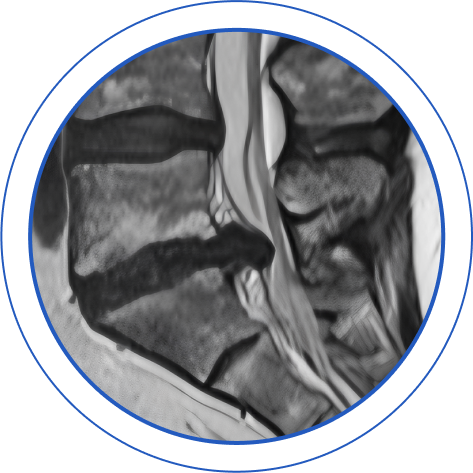
What are the dangers of a lumbar hernia?
- Pain syndrome in the lower back and leg that interferes with life
- Spinal nerve damage
can lead to numbness and
impaired movement in certain muscles of the leg - Pelvic organ dysfunction
(urinary incontinence, constipation) - Erectile dysfunction
(for men) - Dyspareunia – painful intercourse
(for women)
Comparative table of methods for surgical removal of herniated intervertebral disc
| Parameter | Endoscopic discectomy | Microdiscectomy | Traditional (open) surgery |
|---|---|---|---|
| Complication rate | <1% | 2-5% | 5-10% (infections, bleeding) |
| Recurrence rate | up to 2% | 5-7% | 5-10% |
| Rehabilitation period | |||
| Return to office work | 10-12 days | 2-4 weeks | 4-6 weeks |
| Return to physical work | 6 weeks | 6-12 weeks | 3-6 months |
| Postoperative pain level | Low | Moderate | High (strong painkillers required) |
| Hospital stay | 1 day | 1-3 days | 3-7 days |
| Verticalization | After 2 hours | After 6-12 hours | After 1-2 days |
| Muscle and ligament damage | Minimal | Moderate (smaller incision) | Significant (large incision, tissue removal) |
| Blood loss | Minimal (<50 ml) | Moderate (50-100 ml) | High (up to 200-500 ml) |
| Postoperative limitations | Minimal | Moderate (4-6 weeks) | Significant (6-12 weeks of limited mobility) |
| Safety for patients weighing >100 kg | Safe | Moderate | Limited (difficult access) |
| Type of anesthesia | Local or light general | General or local | General |
| Operation duration | 15-30 minutes | 1-2 hours | 2-4 hours |
| Need for implants | Usually none | Rarely | Sometimes needed (depending on the case) |
| Cosmetic result | Good (scar almost invisible after 6 months) | Satisfactory (small scar) | Unsatisfactory (visible scar) |
| Scar formation | Minimal (scar <1 cm) | Moderate (scar 2-4 cm) | Significant (large visible scar) |
| Cost of procedure | High (specialized equipment) | High (microscope required) | Medium (less equipment but longer stay) |
| Availability of method | Limited (specialists and equipment required) | Available in specialized centers | Widely available (traditional technique) |
Lumbar hernia: treat or operate?
In an interview, Prof. Iakiv Fishchenko answers questions about the treatment of intervertebral disc hernias. All aspects of conservative treatment, nerve blocks, and spine surgery are discussed in detail.
Why choose us?
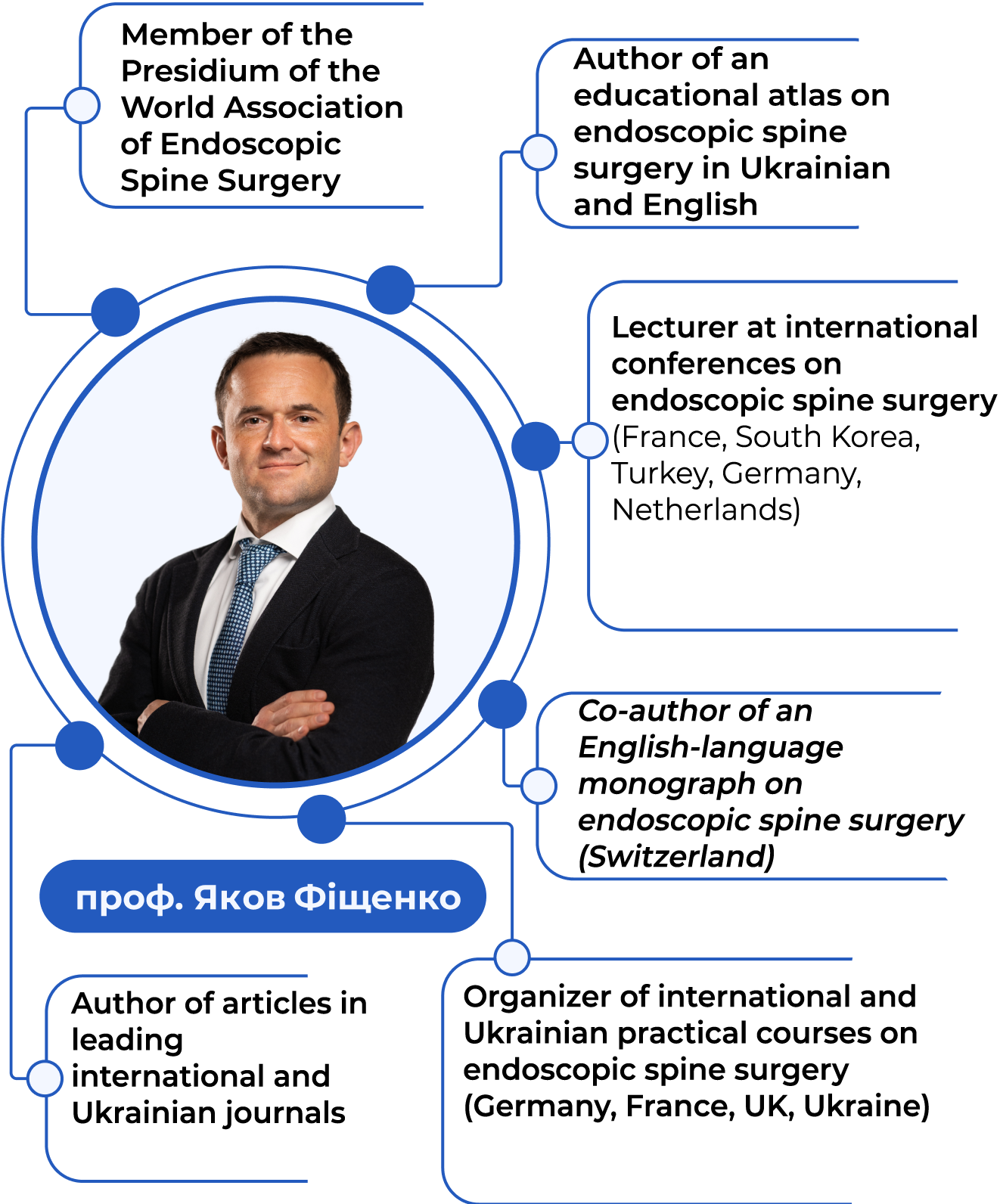
1 THE MOST EXPERIENCE IN ENDOSCOPIC SPINE SURGERY IN UKRAINE
OVER
400+
endoscopic surgeries annually
OVER
3000+
total endoscopic surgeries performed
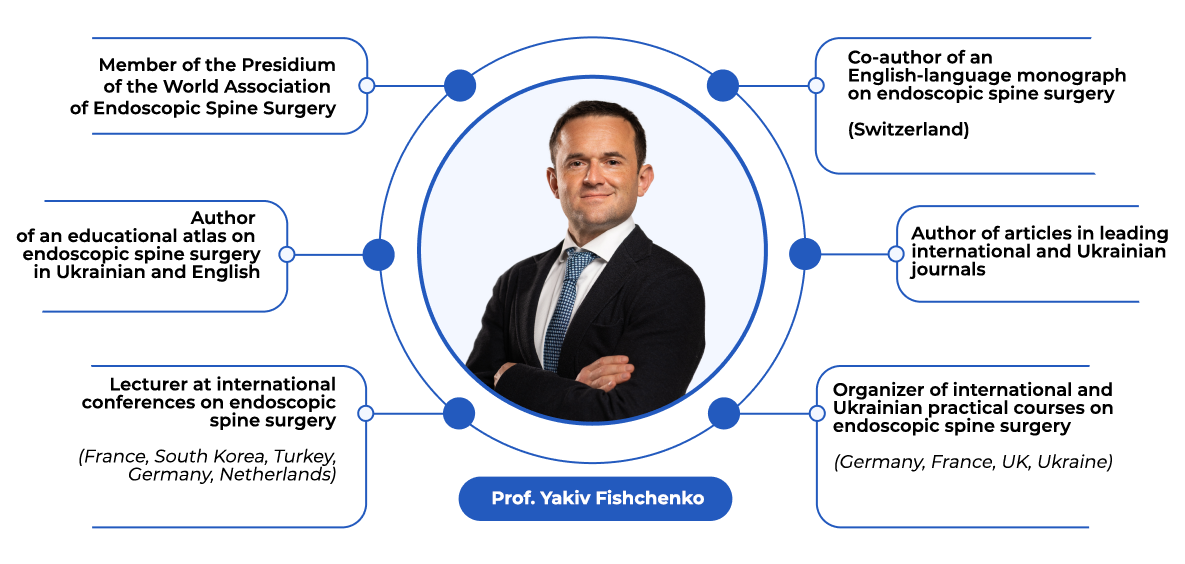
2 RECOGNIZED WORLD-CLASS EXPERTS IN ENDOSCOPIC SPINE SURGERY
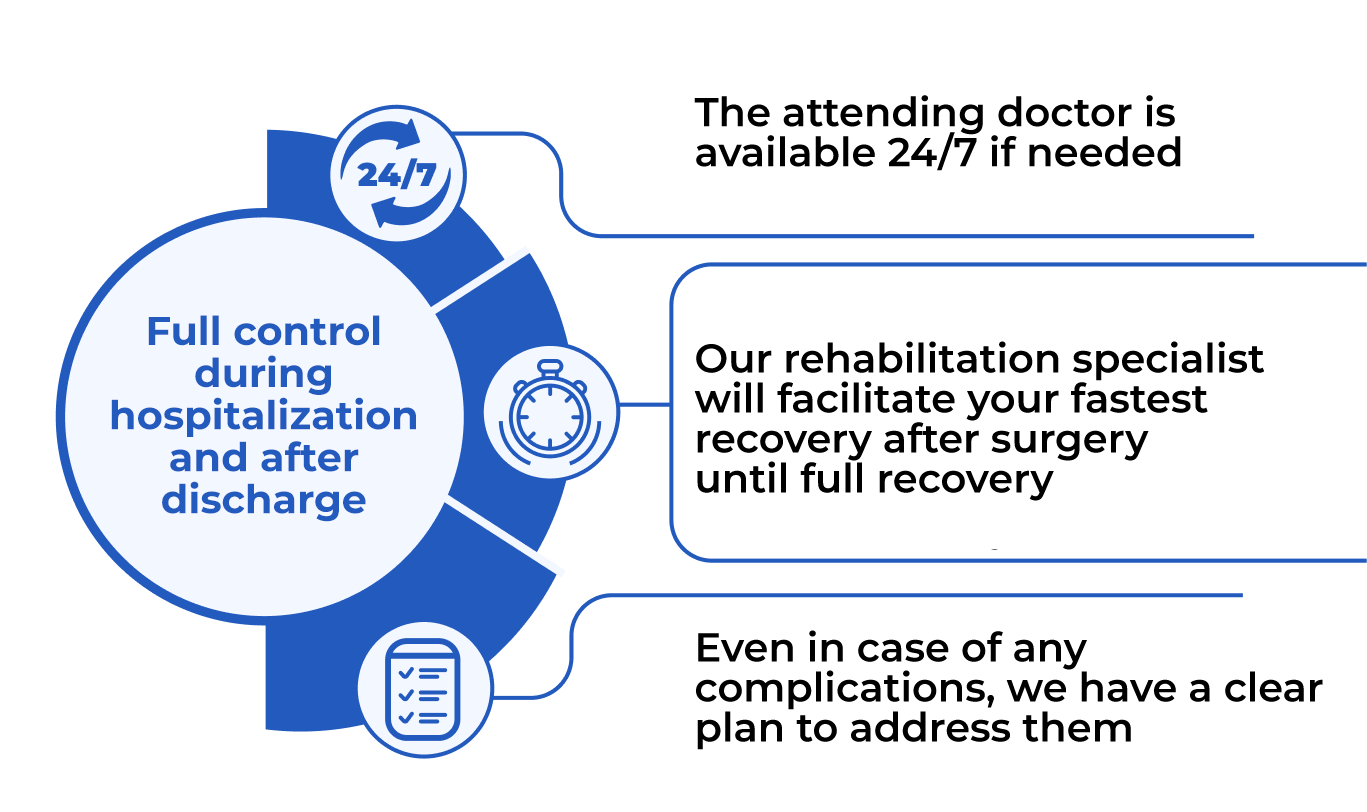
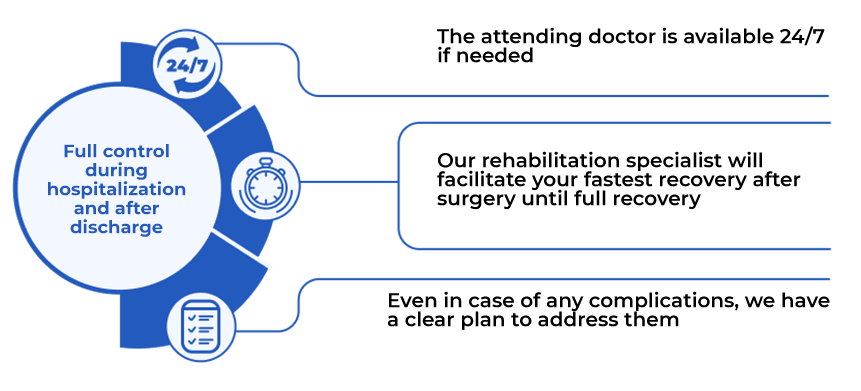
3 SYSTEM OF FULL CONTROL AND ASSISTANCE AT ALL LEVELS
Reviews
Show more
I arrived at the department practically bedridden with unbearable pain. The decision was made to operate. Although the surgery was complex, it was successful thanks to the professionalism of the doctors. I am currently undergoing treatment and rehabilitation under the supervision of a rehabilitation specialist.
Show more
I sought help with a diagnosis of an L5-S1 intervertebral hernia, accompanied by severe pain and numbness in my right leg. The decision was made to perform surgery. The operation was successful thanks to the professionalism of the specialists. I feel relief afterward; the severe pain has gone, and the sensation in my leg is starting to return. I am very grateful to the doctors for their incredible work.
Show more
My name is Svitlana, and I am 32 years old. I sought help from Prof. Iakiv Fishchenko because I had a lumbar hernia, and I couldn’t walk properly; the pain was excruciating, and my right leg hurt terribly. I was practically dragging it behind me. The doctor insisted on surgery, and I agreed. I trusted Prof. Fishchenko because he had previously helped my mother (who also has a hernia in the cervical spine) and my father, who had pain in the thoracic spine. After the surgery, I was amazed because I could stand and walk without pain, relying on my leg, just 2 hours later. The operation went perfectly, thanks to Prof. Fishchenko’s professionalism. He truly lives for his work, an incredibly talented surgeon and a psychologist. Honestly, without him, I wouldn’t be able to walk at all. Special thanks also to the rehabilitation specialist Dr. Kravchuk, who has been with me since the surgery, providing recommendations for restoring the musculoskeletal system. Without her, I wouldn’t have been able to functionally restore the function of my leg and back. Dr. Kravchuk is passionate about her work, cares deeply for her patients during recovery, and is always available. I followed and continue to follow all the recommendations of my rehabilitation specialist. I feel that the recovery process is going well. I became convinced of this when I started doing exercises and realized how important they are for post-operative recovery. Prof. Fishchenko’s entire team works cohesively. Thanks also to Dr. Zimin, who timely adjusted my treatment during recovery and was always available, even after discharge. I am also grateful to the anesthesiologist Dr. Shchegolkov I recovered from anesthesia calmly and without side effects. I am sincerely grateful to these doctors I mentioned. Thanks to them, my recovery is going well. So, I wish everyone not to delay, not to fear surgery, and to follow all recommendations. I experienced this firsthand.
Show more
I am very satisfied with the surgery under the guidance of an amazing team: Dr. Kravchuk, who is Miss Elegance and Kindness! She is very gentle, intelligent, wise, empathetic, cheerful, and a true professional in her field - she explained, showed, and advised how to recover after the surgery, extremely attentive. Thank you for your kind soul! Dr. Shchegolkov, the anesthesiologist, I’ve never seen such precision - he checked everything, asked questions, and when I was lying in the operating room, he said, “Olesya, should I put you under quickly or slowly?” I said, “Quickly.” And then he said, “You’re about to experience champagne bubbles,” and you won’t believe it, they were there! He administered the dose in such a way that I felt cheerful before falling asleep, and what’s interesting - there really were bubbles in my head, like the sound of champagne for sure. Dr. Melenko, oh my, whenever I saw him, my mood lifted for some reason; he’s so calm yet dynamic, I ask questions - and he answers everything, so clear and precise, thank you for prescribing me pills to restore my dear little back and for helping me remove stitches at home over the phone. And I felt Prof. Fishchenko’s work after the surgery because everything was visually beautiful, easy, my back became happy right after his hands. I’m running around - unstoppable, nothing has bothered me since, not once - neither the incisions nor pain. When I first arrived for the surgery and was placed on a wheeled bed, I saw him in the corridor, waved, and greeted him, and he waved back - I don’t quite remember with what, his hand or head, but we greeted each other. I recognized him from a photo because we had arranged everything by phone, as I already had a diagnosis and needed skilled hands and a sharp mind. He is SUCH A STAR, THANK YOU, WONDERFUL PEOPLE, FOR EVERYTHING!!!! Stay healthy and happy, with prosperity in everything. May the kindness you give to the world come back to you!!
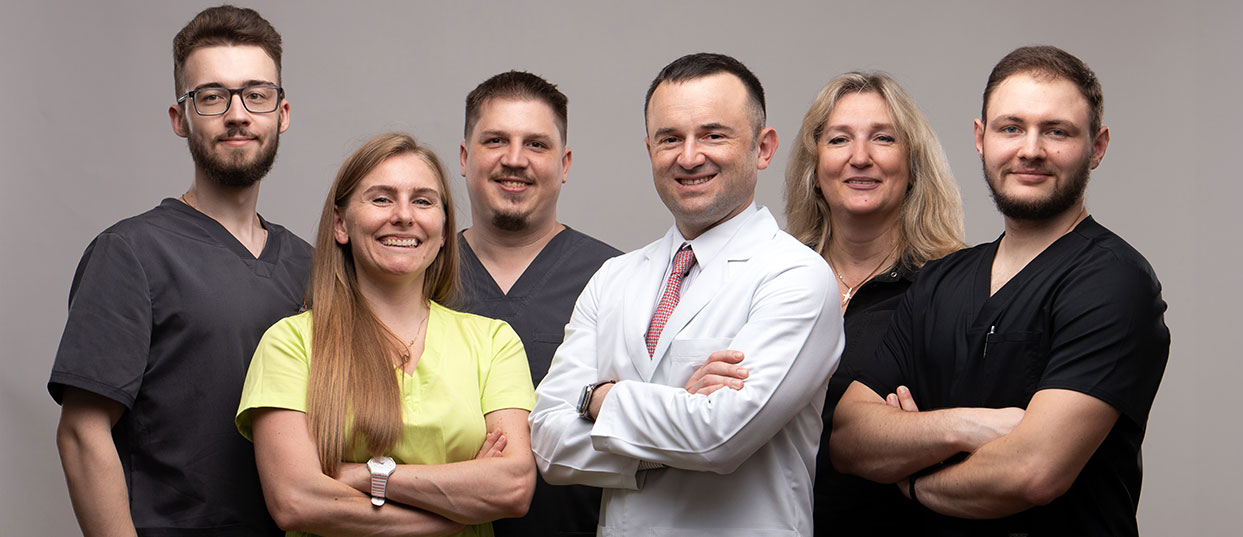
Contact us and our team will help you get rid of pain and return to a full life.
National Institute of Traumatology and Orthopedics
NAMS of Ukraine
NAMS of Ukraine
Kyiv, Bulvarno-Kudryavska St., 27
Frequently Asked Questions
When is surgery considered for a herniated disc?
Surgery may be considered when a herniated disc compresses a nerve and causes severe or persistent leg pain, numbness, muscle weakness or restricted mobility. Urgent assessment is required if urinary dysfunction, saddle numbness or progressive weakness develops. The decision is based on symptoms, clinical examination and MRI findings. Professor Iakiv Fishchenko personally assesses whether endoscopic surgery is appropriate.
Can every disc herniation be removed endoscopically?
In Professor Fishchenko’s practice, every disc herniation operation is performed exclusively endoscopically. The size, migration and location of the fragment are considered when planning the biportal BESS approach.
What MRI files are required for an online consultation?
Please send the complete MRI study of the relevant spinal region in its original DICOM format, either as an archive or through a download link. The radiology report and a brief description of symptoms should also be included. Photographs of individual images or the written report alone are insufficient for reliable surgical planning.
How does laser treatment differ from endoscopic disc herniation removal?
Laser decompression vaporises a small amount of nucleus material within the disc in an attempt to reduce intradiscal pressure, but it does not directly remove the herniated fragment compressing the nerve. It is intended for selected contained herniations with an intact annulus. In extruded or sequestered herniations with annular rupture, laser treatment is not used and is contraindicated. During BESS, the professor directly visualises and removes the fragment under endoscopic control.
How does BESS differ from microdiscectomy?
During microdiscectomy, the surgeon works through an operative access using an external microscope. With BESS, the optics are positioned directly beside the pathological area, while the endoscope and instruments are introduced through two separate small portals. This provides a wide view and independent instrument movement and may reduce disruption of muscles and healthy tissue. BESS is a complete surgical procedure, not a needle-based intervention.
How long do the operation and hospital stay take?
Endoscopic disc herniation removal usually takes 15–30 minutes. The patient is normally mobilised on the same day, and the hospital stay is usually one day. The exact timing depends on the location of the herniation, fragment migration, previous surgery and the patient’s general condition.
What type of anaesthesia is used for BESS?
For maximum patient comfort, all endoscopic spine procedures are performed under general anaesthesia. An anaesthesiologist continuously monitors the patient, and a preoperative assessment is completed before surgery.
Can an extruded or sequestered fragment be removed endoscopically?
Yes. BESS enables direct visualisation and removal of an extruded or sequestered fragment through the annular defect under continuous visual control. Professor Fishchenko performs all such operations exclusively using biportal endoscopy.
Can BESS be performed for a recurrent herniation after previous surgery?
Yes. In many cases, a recurrent herniation can be removed endoscopically. If there is no significant instability, fixation may not be required. When instability, marked degeneration or repeated recurrence is present, Professor Fishchenko may recommend stabilisation using fixation implants.
Is a body weight above 100 kg an obstacle to BESS?
No. Significant body weight is not an obstacle and, in selected cases, can be a practical advantage of BESS: the small working portals avoid a large incision and extensive muscle dissection even when the soft-tissue layer is thick. Anaesthetic and other individual risks are assessed before surgery.
When may spinal fixation be required?
For an isolated herniation without significant instability, fixation is generally unnecessary. When marked disc degeneration, instability, spondylolisthesis, previous spinal operations or a combination of these factors with excess body weight is present, Professor Fishchenko may recommend endoscopic surgery with fixation implants. The decision is based on MRI and, when required, additional imaging.
What are the complication and recurrence rates?
According to Professor Fishchenko’s own clinical materials, based on more than 3,000 personally performed endoscopic operations over eight years, the complication rate is below 1% and the recurrence rate is no more than 2%. These figures describe the surgeon’s personal experience but do not guarantee the same outcome for every patient. Individual risk is discussed before surgery.
What is recovery like after surgery?
Patients usually begin walking approximately two hours after surgery. Return to office work is often possible after 10–12 days, while return to physical work commonly takes about six weeks. Final timelines and the individual recovery programme are determined by the rehabilitation specialist.
Who performs the operation?
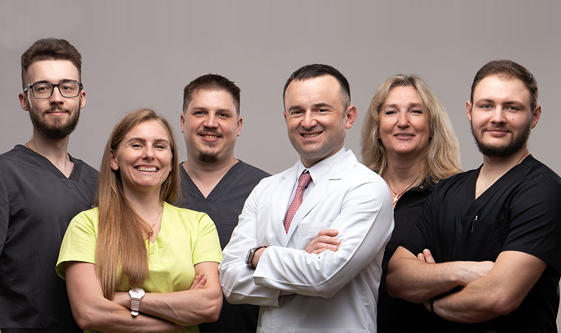
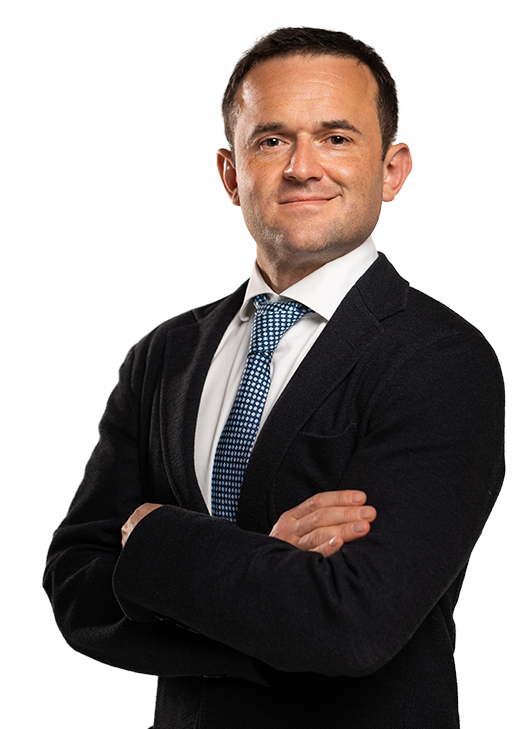
The operation is personally performed by Professor Iakiv Fishchenko together with a specialised surgical team. Over the past eight years, he has personally completed more than 3,000 endoscopic operations and currently performs more than 400 such procedures annually.
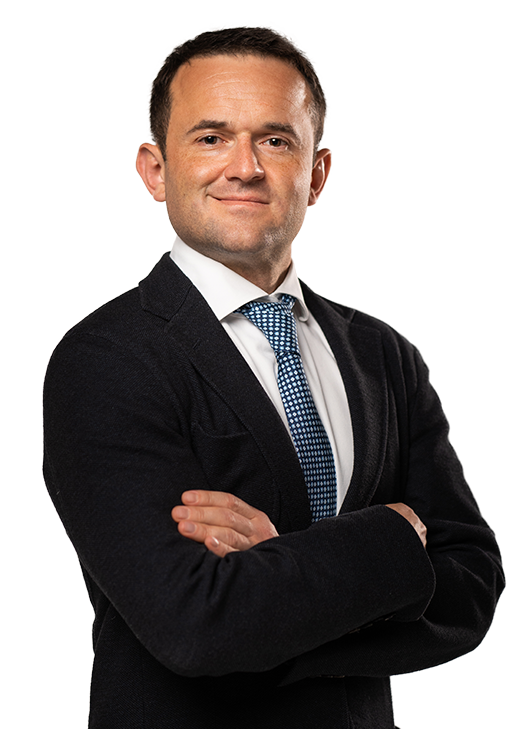
Have a question?
FISHCHENKO
Yakiv Vitaliyovych
responds in messengers


Choose a convenient communication method. Click on the icon
 +38 094 821 08 30
 fishchenko@gmail.com
FISHCHENKO
Yakiv Vitaliyovych
responds in messengers
Choose a convenient communication method. Click on the icon
+38 094 821 08 30 fishchenko@gmail.com